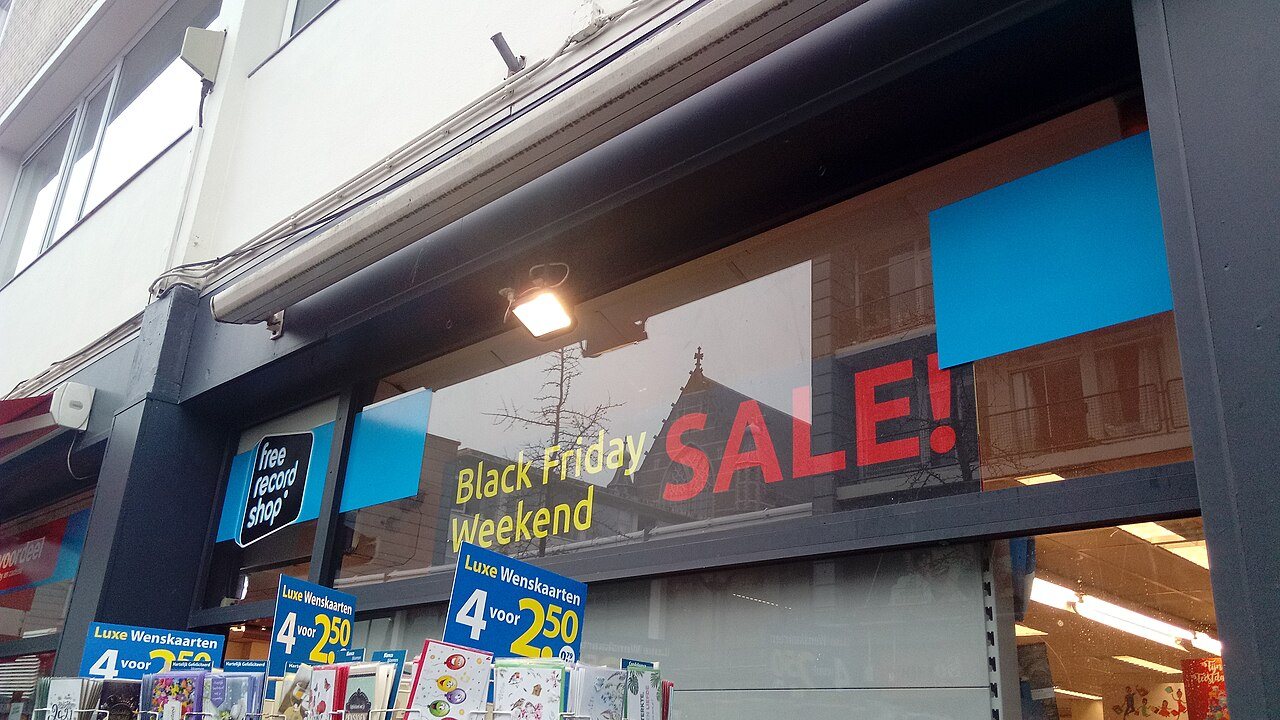
Photo: Donald Trung Quoc Don, CC BY-SA 4.0, via Wikimedia Commons
If you ask around for why the day after Thanksgiving is called Black Friday, you will probably hear the accounting version. Retailers run at a loss for most of the year, the story goes, and this is the day their books finally move from red ink into black.
It is a tidy explanation, and as far as anyone has been able to trace, it was invented after the fact. The name is older than that story by a couple of decades, and it was never meant as a compliment.
With the sales already starting earlier every year (some stores now run "Black Friday" deals for most of November), it seemed like a good moment to sort out where the phrase came from.
The first Black Friday was a gold crash
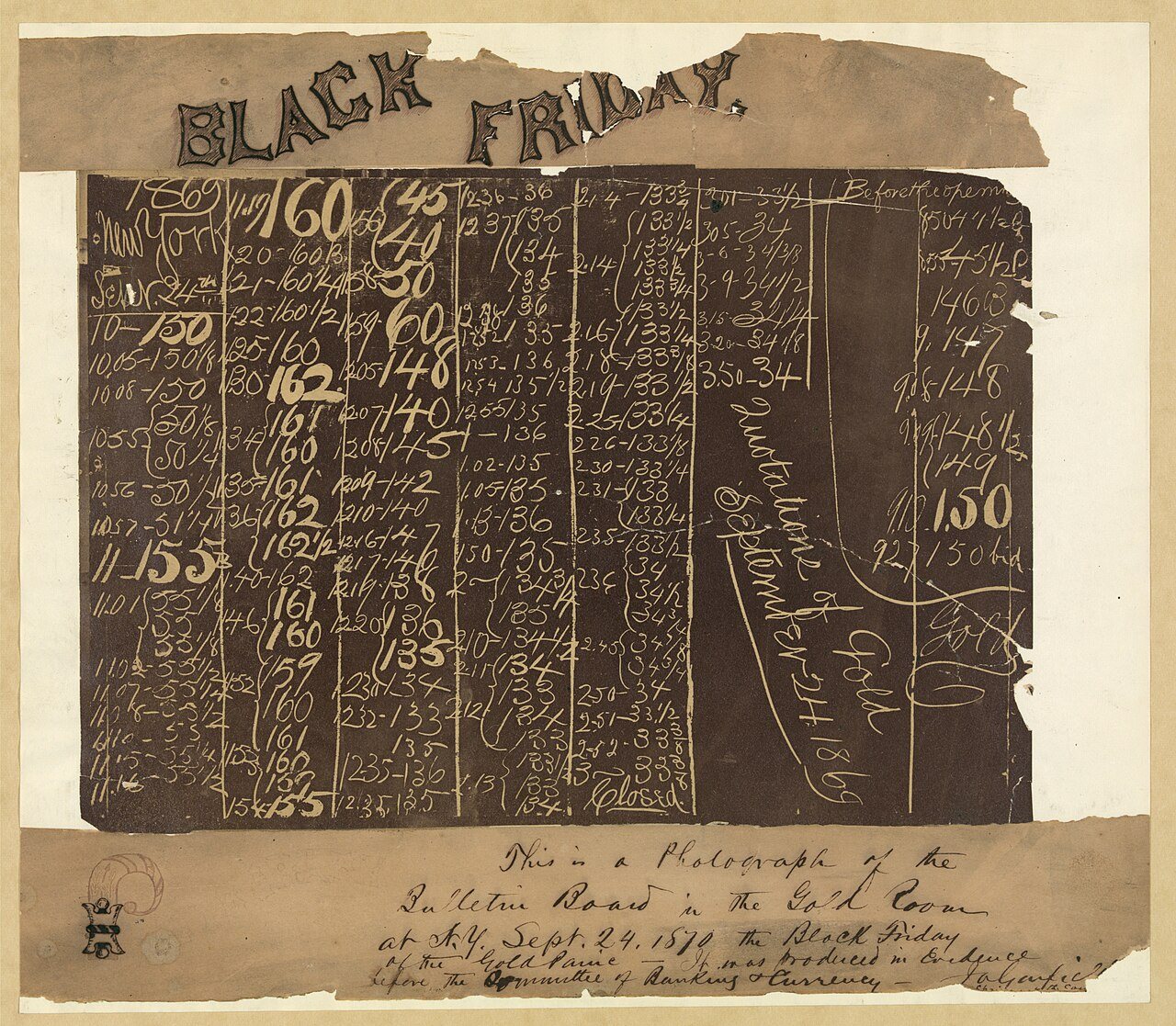
The Gold Room bulletin board from September 24, 1869, with chalked gold prices rising past 160 and falling back to the 130s, under a hand-lettered Black Friday heading (Public domain, via Wikimedia Commons)
Long before it had anything to do with shopping, "Black Friday" meant a financial disaster. The most famous one happened on September 24, 1869.
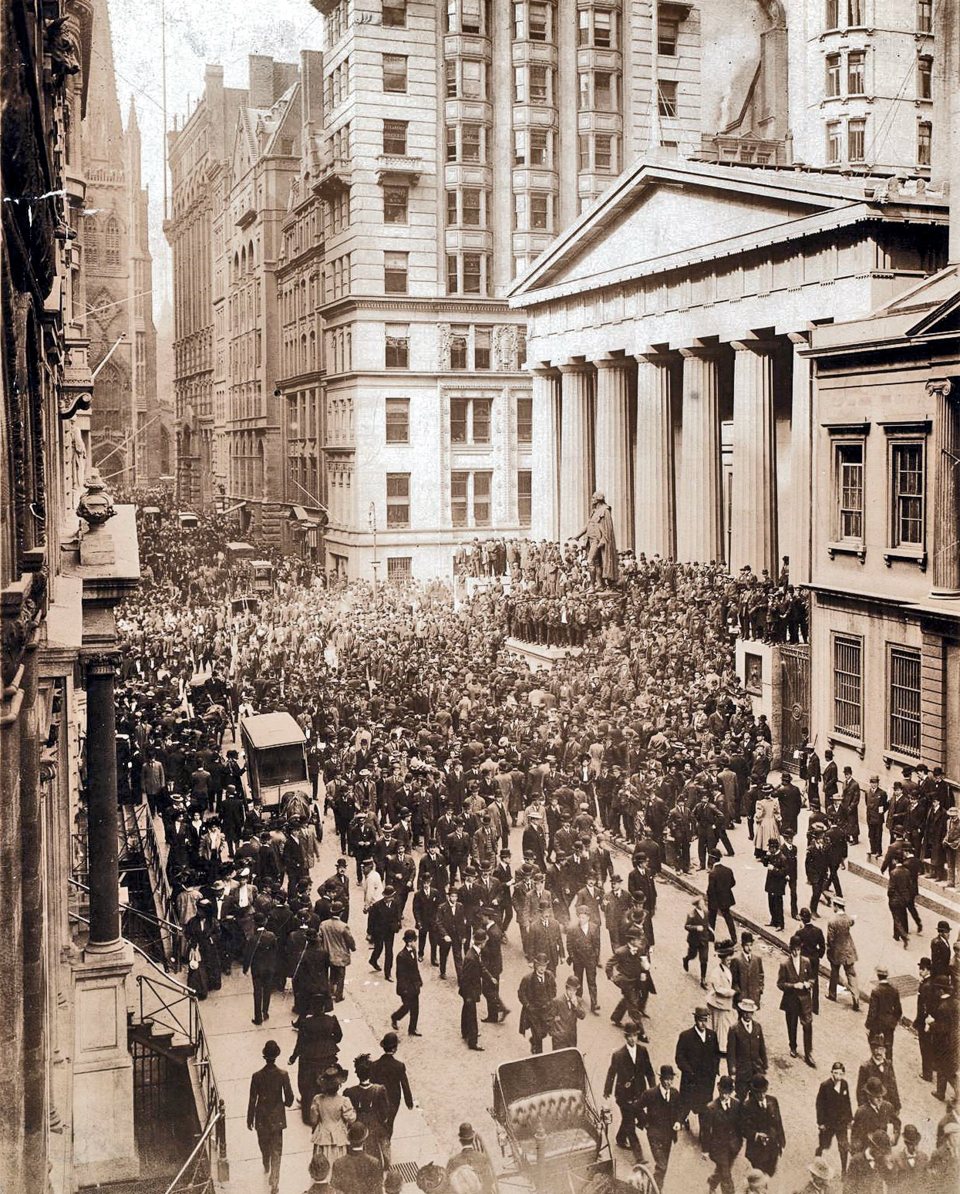
Two speculators, Jay Gould and James Fisk, had spent weeks trying to corner the market in gold in New York. Their plan depended on the federal government keeping its own gold off the market. When President Ulysses S. Grant's administration decided to sell Treasury gold instead, the price collapsed in a matter of minutes. Brokers were ruined, and the panic spread well beyond the Gold Room where the trading happened.
The photograph above shows the bulletin board from that day, with the prices chalked up as they happened. You can follow gold climbing past 160 in the morning and then falling to around 133 by the afternoon. It was later used as evidence in a congressional investigation, and the note at the bottom is signed by James A. Garfield, who chaired the House committee looking into the affair. For most of the next century, "Black Friday" in a newspaper meant something like this.
Philadelphia's police gave it a new meaning
The shopping meaning comes from Philadelphia, and from people who had good reason to dread the day.
In the 1950s and early 1960s, the city's police officers started calling the Friday after Thanksgiving "Black Friday." The crowds of shoppers downtown were enormous, and the Army-Navy football game was often played in Philadelphia that Saturday, which brought in even more visitors. Officers had their days off canceled and spent long shifts dealing with traffic jams, packed sidewalks and shoplifters. The name was a complaint.
Local merchants did not love it. In 1961 there was an attempt to rebrand the day as "Big Friday," which went about as well as you would expect. The phrase stuck around in Philadelphia, and by the mid-1960s it was showing up in print outside the city too, including a 1966 advertisement in a magazine for stamp collectors that explained the Philadelphia usage to its readers.
There is also an even earlier use from the factory world: a 1951 trade publication used "Black Friday" for the day after Thanksgiving because so many workers called in sick to make a four-day weekend. That one never caught on, but it shows how naturally the word "black" attached itself to a day people were not happy about.
Where the red ink story came from
For years the term stayed mostly regional, and retailers in other parts of the country did not use it much. It went national in the 1980s and 1990s, and that is roughly when the friendlier explanation appeared: the idea that stores spend the year in the red and only get into the black after Thanksgiving.
I can see why stores liked it. It turned a name about traffic jams and miserable police officers into a story about prosperity. But it is a later rationalization, and it does not fit the history. Retail finances do not flip on a single day, and the phrase was being used in Philadelphia long before anyone attached it to profit and loss.
Why the shopping season starts after Thanksgiving
The date itself has its own small economic history. For decades, department stores treated the arrival of Santa Claus at the end of the Thanksgiving parades, including Macy's in New York, as the unofficial start of the Christmas shopping season. Starting earlier was considered bad form.
That custom caused a political fight in 1939. Thanksgiving fell on the last Thursday of November, which that year was the 30th, leaving a short shopping season. President Franklin D. Roosevelt moved the holiday a week earlier to give retailers more selling days. Some states went along and some did not, so for a couple of years the country celebrated Thanksgiving on two different dates (critics called the earlier one "Franksgiving"). In 1941 Congress settled it by fixing the holiday on the fourth Thursday of November, which is where it has stayed.
Cyber Monday is much newer. The online retail trade group Shop.org coined the term in 2005 to promote online sales on the Monday after Thanksgiving.
What the history means for your wallet
None of this changes how much a television costs, but it is a useful corrective. Black Friday was never designed around shoppers getting a good deal; it grew out of a crowd problem and was polished into a marketing event.
That is worth remembering when the countdown banners start. Prices on many items move around through November and December, and a "Black Friday" label on a price tag says more about the date than about the size of the discount. If you want a practical method for checking whether a deal is real, we went through it category by category in our guide to spotting real Black Friday deals. As always, this is general information, not personal financial advice. (And if you are going to be anywhere near downtown Philadelphia on the day after Thanksgiving, maybe be nice to the traffic police.)
Enjoyed this story?Get a new one every day on social.