Photo: Maksym Kozlenko, CC BY-SA 4.0, via Wikimedia Commons
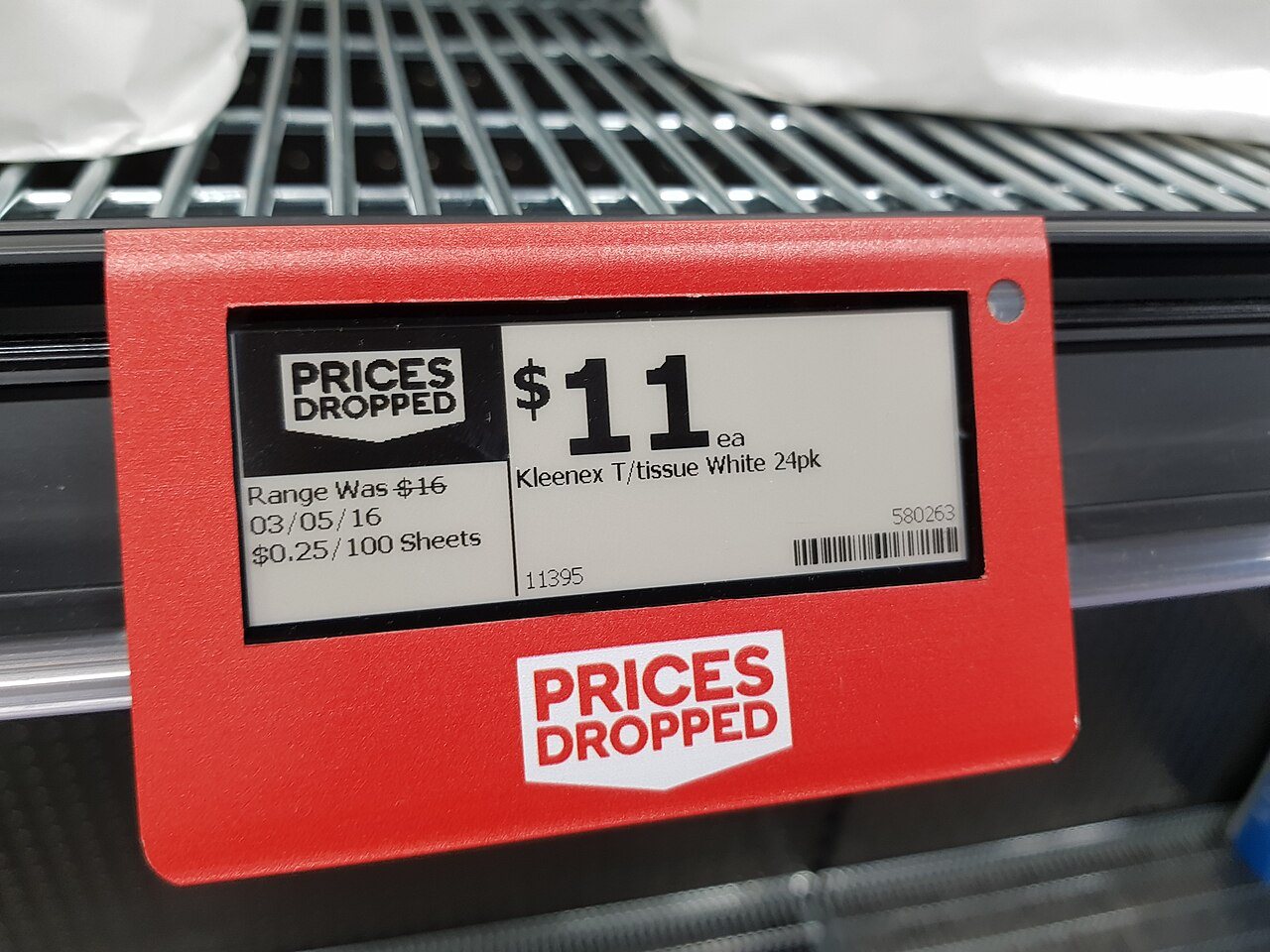
Look at the shelf tag in the photo above. The big number is the price of a 24-pack of toilet tissue. Down in the bottom left corner, in much smaller type, is a second figure: a price per 100 sheets.
That small figure is the unit price, and it is the most useful number in the grocery store. It is also the one most of us skip, because the store prints it in the least visible spot on the tag. (I don't think that is an accident, but I can't prove it.)
Here is how to use it, and the handful of ways it can still mislead you. This is general information, not advice for your particular budget.
What the unit price is
The unit price is the cost of the product divided by a standard amount. For food it is usually per ounce, per pound, per 100 grams or per kilogram. For household goods it might be per count, per load, per roll or, as in the photo, per 100 sheets.
The point is to let you compare packages of different sizes without doing math in the aisle. You can do the same calculation yourself when a tag leaves it out: divide the price by the amount in the package. Most phones have a calculator one swipe away, and once you have done it a few times for the things you buy often, you start to get a feel for what a fair price per ounce looks like. A 12-pack and a 30-pack, a 500 g bag and a 1 kg bag: the unit price puts them on the same scale.
Whether a store has to show it depends on where you live. The European Union requires unit prices for most food and household products. The UK has its own rules for larger shops. Australia introduced a grocery unit pricing code for larger supermarkets in 2009. In the United States there is no federal requirement, and rules vary by state, so you will see it on some tags and not others.
Compare like with like
The most common trap is two tags using different units. One brand of paper towels might be priced per roll, while the brand next to it is priced per 100 sheets. Since "roll" means wildly different things from one brand to the next (double, mega, triple, whatever this year's name is), per-roll pricing tells you very little.
When the units do not match, look for the one that measures the stuff you actually use. Sheets beat rolls. Ounces or grams beat "each." For laundry detergent, the cost per load is more useful than the cost per ounce, because concentrations differ.
The sale tag can show the old unit price
Stores often stick a sale sign over or next to the regular tag. Sometimes the unit price printed on the old tag is still based on the regular price, so the sale item looks worse than it is in a comparison.
If something is on sale, do a quick check on your phone: sale price divided by the amount. It takes ten seconds and it is the only way to be sure.
Bigger is usually cheaper, but not always
Bulk packages often have a lower unit price, which is why people assume the biggest box is the best buy. Very often it is. But it is common enough to find a medium size, or two small packs on promotion, that beat the jumbo version. The unit price is the quickest way to catch those cases.
The other limit of bulk buying is waste. A lower price per ounce does not help if a third of the bag goes stale or spoils before you finish it. For perishables, the right size is the one you will actually use up.
Watch for shrinking packages
When manufacturers reduce the amount in a package and keep the price the same (often called shrinkflation), the shelf price does not move, so it is easy to miss. The unit price does move, though. If you buy the same products regularly, glancing at the unit price now and then is one of the few ways to notice that a box of cereal or a bag of chips has quietly gotten smaller.
A simple routine for your next trip
You don't need to compare every item. Pick the five or six things you buy most often (coffee, cereal, paper goods, detergent, whatever fills your cart) and check the unit prices across brands and sizes once. Note which option comes out ahead, ideally in your phone's notes app, and check again every few months, since prices and package sizes change.
Store brands are worth including in that comparison. They frequently come out ahead on unit price, though not in every category, and the only way to know is to look at the tag. It is not exciting, but it is one of the few grocery habits that saves money every single week without asking you to eat anything you don't want to eat.
Enjoyed this story?Get a new one every day on social.